

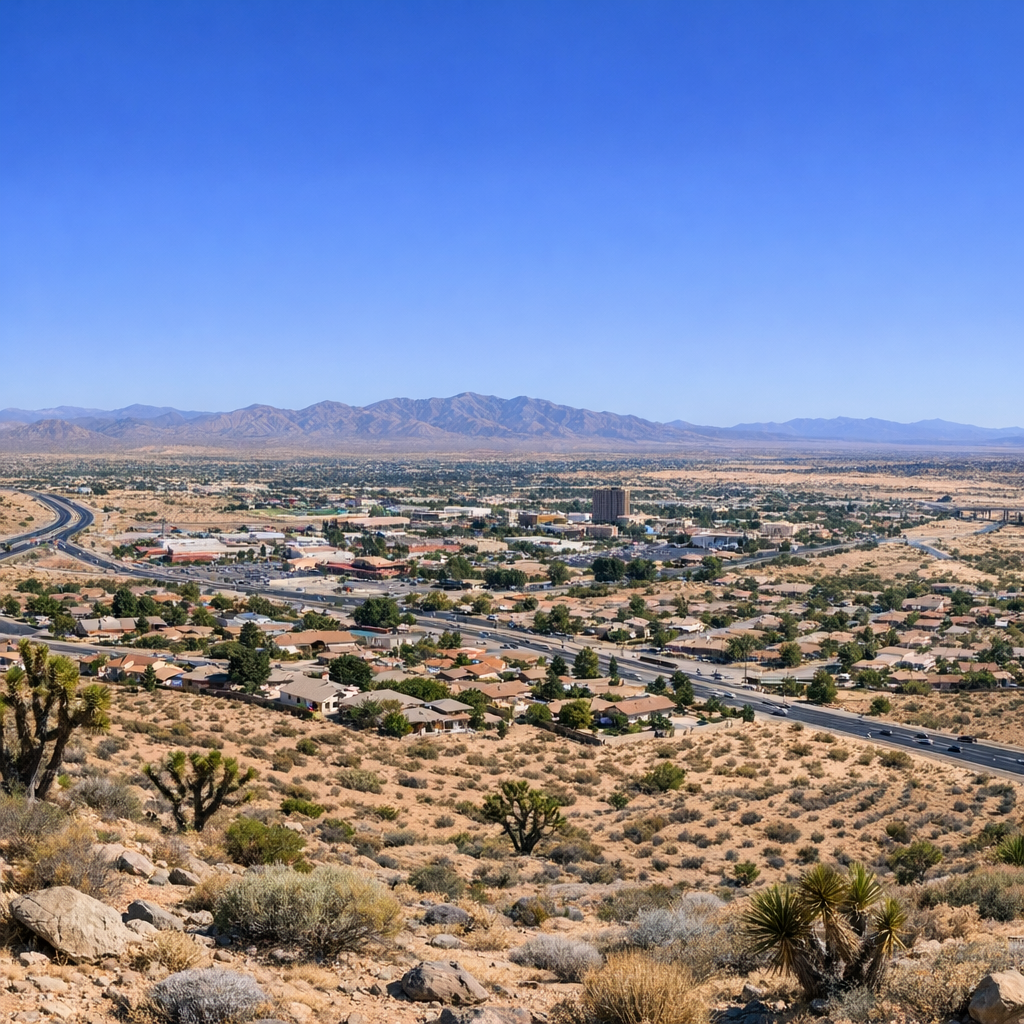
Victorville, situated in the High Desert region of California, experiences a unique climate characterized by distinct seasonal variations. Understanding these patterns is essential for residents and visitors alike.
Winter: Mild Days and Cool Nights
During winter months, Victorville enjoys mild daytime temperatures averaging around 60°F, while nighttime temperatures can drop to or below freezing. Rainfall is more frequent in this season, though the city receives less precipitation compared to coastal areas due to the rain shadow effect of surrounding mountain ranges. Snowfall is rare but possible, typically light and short-lived.
Spring: Warming Trends and Blooming Flora
Spring brings a gradual increase in temperatures, with highs reaching the mid-70s by April. This season is marked by blooming native plants and occasional windy conditions. Rainfall decreases as the season progresses, leading into the arid summer months.
Summer: Hot Days and Cool Nights
Summers in Victorville are characterized by hot, dry conditions, with average high temperatures nearing 100°F. Despite the heat, the higher elevation allows for cooler nighttime temperatures, often dropping to the mid-60s. The region’s arid climate results in minimal rainfall during this period.
Autumn: Gradual Cooling and Increased Winds
Autumn sees a gradual decrease in temperatures, with highs in the 80s during September, cooling to the 60s by November. This season often experiences increased wind activity, which can lead to dust storms and reduced visibility.
Environmental Considerations
Victorville’s climate poses specific environmental challenges, including water conservation due to limited rainfall and the potential for heat-related health issues during summer months. Residents are encouraged to stay informed about weather conditions and adopt sustainable practices to mitigate environmental impacts.
By understanding the seasonal climate patterns and associated environmental factors, the Victorville community can better prepare for and adapt to the unique conditions of the High Desert region.